
Lexicon Financial Group Weekly Update — April 22, 2026
“Fear is often our immediate response to uncertainty. There’s nothing wrong with experiencing fear. The key is not to get stuck in it.”
From the desk of Craig Swistun, CIM, MFA-P, Portfolio Manager, Raymond James Investment Counsel, and Wayne Hendry, Client Relationship Manager, Raymond James Investment Counsel
ISSUE 226
Looking Around
When it comes to riding roller coasters, Wayne and I have differing opinions. I do not ride roller coasters anymore. I think I was concussed on the “Great Canadian Minebuster” at Canada’s Wonderland. Wayne, however, is still willing to ride a roller coaster.
The reason for mentioning roller coasters here is that the whole Strait of Hormuz situation feels like we’re on one. Up, down, left, right, right, open, closed, open. One day the news is up and positive, but the next, it is down and negative to the beat of boom, gloom, repeat. It is enough to give anyone a migraine.
The price of energy (oil and gas) has surged, despite some pullbacks whenever it looked like Iran, Israel and the United States (U.S.) were getting closer to negotiating an end to the war. An end to the conflict would allow ships to sail through the Strait again just like they have been doing for centuries, albeit in smaller numbers in the beginning. So far, the most visible impact of the closure of the strait has been higher energy prices.
But there are other impacts beyond rising energy prices.
Farmers who produce our food are now facing soaring nitrogen fertilizer costs due to the sharp reduction in the supply of urea and natural gas from the Gulf. (You can read more about this from a global perspective in the first article in the “Looking to Learn” section.)
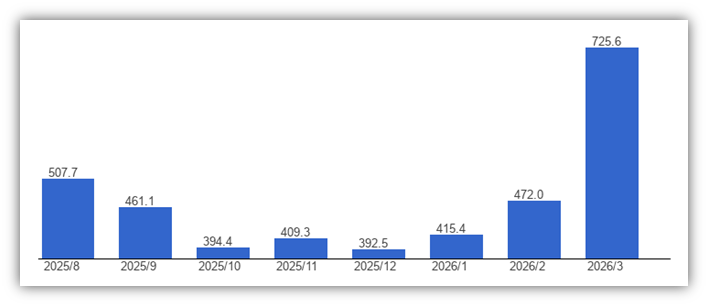
Source: TheGlobalEconomy.com
In case you do not know, urea is a concentrated, easy-to-transport nitrogen fertilizer that increases the yields of many crops, especially staple grains like corn, rice, and wheat. As the “global north” moves into peak farming season, fertilizer needs to be delivered on time or the yield potential for that crop cycle is permanently degraded. So, even if shipping traffic resumes and the current ceasefire transforms into an end of the war, the disruption in the supply of urea so far could still reduce usable fertilizer availability for farmers. And, even if the Strait were to open tomorrow, it will still take time for the higher costs of fertilizer to come down.
Markets, as you know, still operate on the basis of supply and demand. If fertilizer is sitting in a ship unable to transit the Strait, it means the global supply is locked up. Demand hasn’t changed, but supply has and prices will naturally increase.
Agricultural products are highly integrated into the global economy. High costs of fertilizer in the U.S. could incentivize a shift from growing corn to soybeans, which would have a cascading effect on animal feed and ethanol prices. It may take a few years before these systems return to some degree of equilibrium, because switching an entire crop ecosystem can’t happen overnight.
Between 40 per cent and 50 per cent of global seaborne urea trade originates from the Gulf and much of it depends on free and safe passage through the Strait of Hormuz. This trade is doubly critical for farmers in the developing countries of South Asia, Africa, and Latin America who are the largest physical consumers of nitrogen fertilizer from the Gulf. Unsurprisingly, higher input costs will drive food prices higher and possibly cause food shortages in some parts of the world later this year. (1)
The artificial intelligence (AI) sector may also be facing a potential crisis, thanks to the Iran war. There is a significant and growing shortage of helium. Helium is crucial to chip manufacturing and, without it, semiconductor fabrication would be impossible. Helium? Yes!
Helium possesses unique properties that allow it to perform where no other materials can. These properties make helium irreplaceable in certain parts of the semiconductor fabrication process, as well as advanced chip packaging and hard disk drive manufacturing. Helium cannot be synthesized. It can only be extracted as a byproduct of natural gas processing.
If the world’s available helium supply is disrupted further, semiconductor manufacturing may be significantly impacted. This will also increase costs for everything from magnetic resonance imaging (MRI) scans to items that rely on semiconductors and/or hard disk drives to operate, including electric vehicles. That tradition of using helium to inflate party balloons might just become a lot more expensive, too. (2)
Last week, the International Monetary Fund (IMF) downgraded its outlook for the global economy, as conflict in the Middle East has disrupted energy markets and compounded geopolitical uncertainty. It projects global growth of 3.1 per cent in 2026 – 0.2 percentage points below its January forecast and slower than the 3.4 per cent pace in 2025. It also expects global inflation to average 4.4 per cent in 2026, up from a projected 3.8 per cent in January.
The economic fallout from the Iran war will be uneven, according to the IMF. Oil-importing countries, particularly emerging-market and developing economies in Asia, are being hit particularly hard. Oil-price shocks are difficult for policy makers to manage. They pull central banks in two directions – raise interest rates to head off inflation or lower borrowing costs to spur economic activity. (3)
The reality is that these impacts will not evaporate like morning fog, even if the war ends and the Strait is completely open again. It will take time to get shipping back to normal: clear backlogs, repair damaged infrastructure, and re-establish solid supply chains. Of course, this leads to uncertainty and fear (which often translates to market volatility) right now.
Read and Watch
Want deeper insight into topics in your Weekly Update? Then, read and/or right click:
As commodities reshape geopolitics, currency pecking order gets a reset
Why the Iran war is bad for U.S. economic growth
$28 billion and counting: Europe tallies the cost of another energy crisis
How Serious Is the Hormuz Risk for Japan's Economy?
Looking Back
Iran’s move to open the Strait of Hormuz lifted stock markets last week, as investors globally cheered the news. The Toronto Stock Exchange's S&P/TSX Composite Index (TSX) posted a weekly gain of 1.9 per cent with gains for metal mining (as declines for the U.S. dollar boosted the price of gold) and consumer-related shares offsetting declines for energy. Just two of ten major TSX sectors ended lower, including energy. (4)
Last week, U.S. stocks posted strong gains (for the third straight week), amid signs of de-escalating conflict in the Middle East, upbeat corporate earnings results, and a series of generally positive economic data releases. Large-cap growth stocks outperformed their value counterparts for the third week in a row, supported in part by ongoing enthusiasm around artificial intelligence-linked stocks. Although geopolitical developments remained a key focus, investor sentiment received more support last Friday after Iranian Foreign Minister Abbas Araghchi declared the Strait of Hormuz “completely open” for commercial vessels. This and an Israel-Lebanon ceasefire agreement sent oil prices sharply lower. Meanwhile, the first wave of first-quarter earnings reports from several major U.S. banks appeared to be well received, thanks to generally upbeat commentary around current economic conditions in the U.S., particularly around consumer spending.
Up 1.91 per cent at the end of last week, the pan-European STOXX Europe 600 Index rallied as investors digested corporate earnings and Iran’s pledge to open the Strait of Hormuz. Other European stock markets also gained last week. All of this was supported by European Central Bank (ECB) policymakers emphasizing that they are in no hurry to raise interest rates, as they need to reach a sufficient level of data about the effect on underlying inflation and also the negative effect on demand. Notably, the International Monetary Fund (IMF) lowered its forecast for eurozone economic growth, as the conflict in the Middle East could trigger a “major energy crisis” for Europe unless a sustainable solution is found quickly. It now expects 2026 economic growth of 1.1 per cent in the eurozone, down from the 1.3 per cent it had forecast in January.
Japan’s stock markets rose last week, as Japanese stocks rallied for much of the week on cautious optimism that recent ceasefire developments could pave the way for broader diplomatic progress between the U.S. and Iran. Major drivers of markets before the outbreak of the war, including exuberance around artificial intelligence, solid company earnings, and corporate governance reform, returned last week. However, conflict in the Middle East contributed to the biggest month-on-month drop in confidence among Japanese manufacturers in more than three years, according to the monthly Reuters Tankan poll.
China’s stronger-than-expected economic data underpinned a modest rebound in Chinese stock markets last week. These gains were contained as Middle East tensions and oil price volatility raised investor caution. China’s economy began 2026 in better shape than expected, with first-quarter gross domestic product (GDP) expanding 5.0 per cent year over year, accelerating from 4.5 per cent in the previous quarter, buoyed chiefly by export strength and solid industrial output. (5)
The opinions expressed are those of Craig Swistun and not necessarily those of Raymond James Investment Counsel which is a subsidiary of Raymond James Ltd. Statistics and factual data and other information presented are from sources believed to be reliable, but their accuracy cannot be guaranteed. It is furnished on the basis and understanding that Raymond James is to be under no liability whatsoever in respect thereof. It is for information purposes only and is not to be construed as an offer or solicitation for the sale or purchase of securities. Raymond James advisors are not tax advisors, and we recommend that clients seek independent advice from a professional advisor on tax-related matters.
A Closed Strait of Hormuz Risks a Global Food Security Crisis, Morgan D. Bazilian, Gabriel Collins, and Jahara Matisek, War on the Rocks, April 13, 2026
The AI Chip Industry’s Looming Helium Shortage Due to the Iran War Could Crush Semiconductors, David Engle, MarketWise, April 16, 2026
IMF downgrades global economic outlook as Mideast war drives oil shock, Mark Rendell, The Globe and Mail, April 14, 2026
TSX posts fourth straight weekly gain as Iran opens Strait of Hormuz, Tharuniyaa Lakshmi and Fergal Smith, Reuters, April 17, 2026
Global markets weekly update - Signs of Middle East de-escalation support market sentiment, T. Rowe Price, April 17, 2026
SUBSCRIBE
If you’d like to automatically receive the Weekly Market Update by email, enter your email address in the box below.
We respect your privacy, and you can always remove yourself from the mailing at any time.
Looking to Learn?
If you want to know more about some of the topics we wrote about this week, just click on the links below:
The Iran war’s impacts on global fertilizer markets and food production
Beyond Oil: The Strait of Hormuz and The Global Food Risk
Inflation jumps on Iran war shock but few signs yet of spreading price hikes
Eastern Ontario farmers brace for rising costs from U.S.-Iran war
