

lexicon financial group
weekly market update
Each week we provide thoughts on the markets and explore ideas and concepts that are important to investors. We welcome comments and suggestions for topics you’d like to see covered.
As always, we write in plain language in an attempt to demystify the language of the financial markets. We make a real effort to explain things in ways that everyone can appreciate and understand. We may not always get the balance exactly right, but we’re trying.


Archived Commentaries

Lexicon Financial Group Weekly Update — November 18, 2026
It was only a few short weeks ago that consumers in Southern Ontario saw gas prices approaching $2/litre. So, the most recent drop in gas prices may have provided some relief to commuters. The price of regular gas in Toronto today was 147.9¢/L – the lowest level in more than eight months.

Lexicon Financial Group Weekly Update — November 11, 2026
First, given the midterm elections in the United States and the market volatility that followed, we wanted to wait a few days before producing this Weekly Market Update, just to make sure we were capturing as much of the information as possible.
Midterm elections aside, there is a financial market superstition, or myth called the “October Effect” or “Mark Twain Effect.” Basically, it states that stock markets tend to experience lower returns, increased turbulence, or severe crashes during the month of October. Blame Hallowe’en, if you want.

Lexicon Financial Group Weekly Update — October 28, 2026
During the last decade, it seems that technology has been developing faster and faster. Multiple technology sectors have grown at rates that dwarf previous technological revolutions. The convergence of artificial intelligence (AI), cloud computing, mobile technology, and data analytics have fundamentally reshaped how we live, work, and interact with technology and each other.
The acceleration we have experienced in the last 10 years has been anything but gradual. The numbers tell a story of technological advancement that compressed what should have been decades of progress into a few years.

Lexicon Financial Group Weekly Update — October 21, 2026
250 Weeks Later…
And we are still collecting our thoughts and sharing them with you through our Weekly Market Update. Our first edition was published on September 13, 2021 – more than five years ago. Since then, we’ve averaged roughly 48 updates each year, as everyone needs the occasional vacation.
Recently, we went back and read some of those early editions. Maybe we were looking for evidence that our thinking had evolved. Or, perhaps, we were simply curious about how we talked about what was happening in the world at the time. Unsurprisingly, we found that the headlines were familiar: rising inflation, slower wage growth, and lingering concerns about geopolitical events like COVID-19. What struck us the most was not what we wrote about, but what we had forgotten since then.

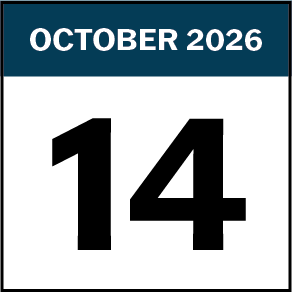
Lexicon Financial Group Weekly Update — October 14, 2026
“Like it or not, we live in interesting times. They are times of danger and uncertainty.” This phrase was part of a speech delivered by Robert Kennedy in South Africa in 1966. (1)
And, given the current state of the world, this phrase is every bit as relevant today as it was 60 years ago. We are certainly living through interesting times, but it is worth remembering that this is nothing new. History has a way of rhyming, and periods of uncertainty eventually pass. This applies to life in general and to equity markets as well.

Lexicon Financial Group Weekly Update — October 7, 2026
If you regularly read our weekly updates, you know that one topic we often discuss is the behavioural aspect of investment management.
Research shows that investors generally face two significant types of bias:
• Emotional biases that typically involve spontaneous decisions driven by personal feelings and psychological influences.
• Cognitive biases which involve decisions based on established beliefs or assumptions that may not be accurate.

Lexicon Financial Group Weekly Update — September 30, 2026
Tariffs are back.
And they are bigger. And reciprocal. And disruptive.
Inflation is stickier.
Wars in Ukraine and the Middle East continue to drive energy and food prices higher. The world is less dependent on oil than in the 1970s as green energy has replaced some of the demand, but the strong correlation between oil prices and inflation still exists.

Lexicon Financial Group Weekly Update — September 23, 2026
Have you ever wondered why the price of diesel is higher than gasoline?
The war between the United States and Iran has driven energy prices higher. We’re used to hearing about the price of oil, but more and more, we’re hearing specifically about the price of diesel. And, for good reason.
Net exports of diesel and gasoil from Gulf countries averaged 390,000 barrels a day in August, a quarter of pre-war levels. Lower supply and consistent demand? Prices rise.

Lexicon Financial Group Weekly Update — September 16, 2026
One of the golden threads that ties all of our weekly updates together – we’ve been writing them for over five years – is the importance of maintaining a diversified portfolio.
It’s worth talking about again, especially today when there are conflicts raging in parts of the world, inflation rising due to tariffs and disruption to oil and gas supplies.

Lexicon Financial Group Weekly Update — September 9, 2026
Bonds are often seen as being boring. Maybe that’s because, for decades, they’ve been looked at as the “safer” part of an investment portfolio. By default, that would make a riskier investment such as a stock seem more exciting. Until it isn’t. Because both are equally important when constructing investment portfolios.